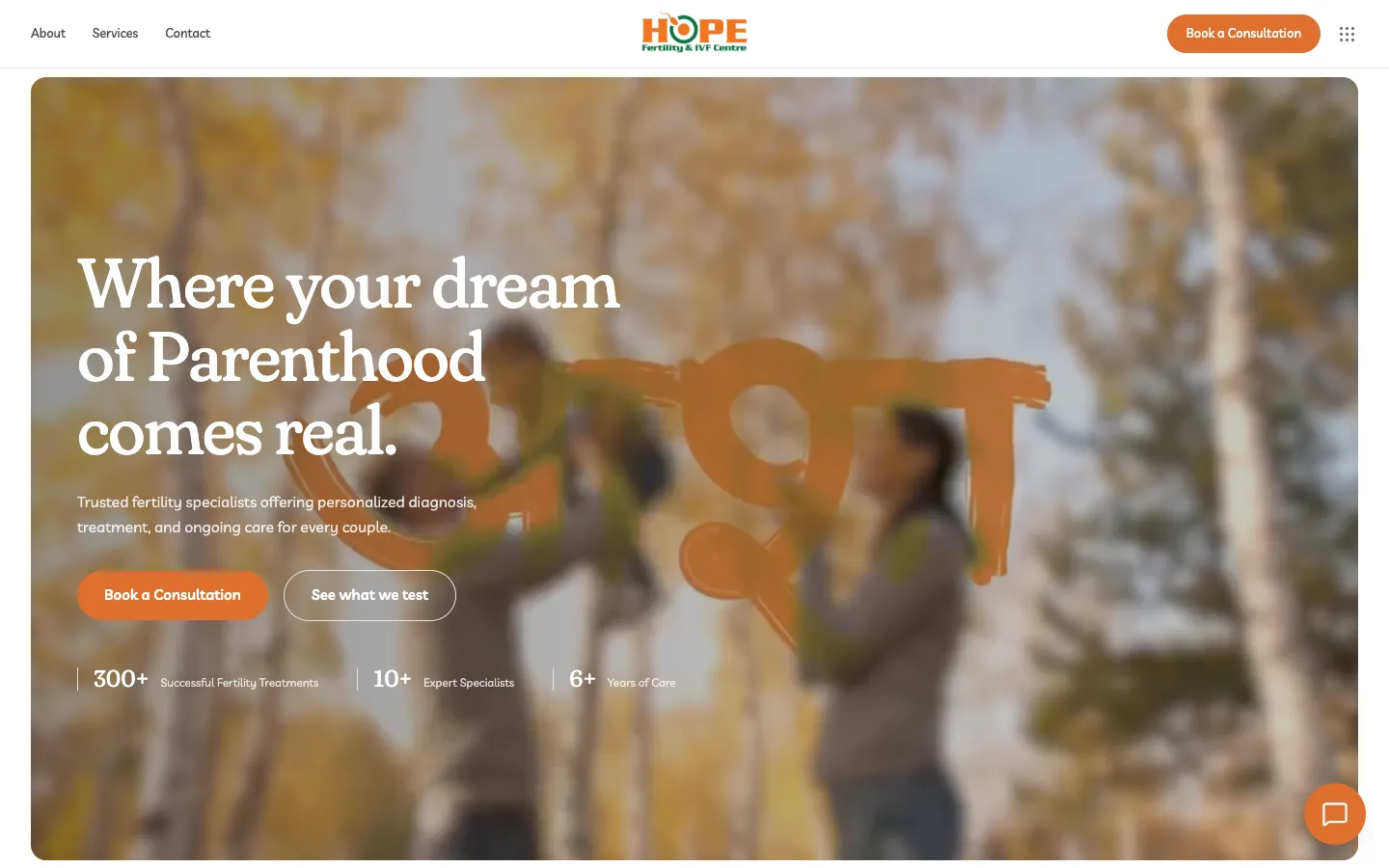
Hope Fertility & IVF Centre · Healthcare
A clearer path to care for Hope Fertility (opens hopefertility.com.np)
A website and marketing that help couples understand treatment and get in touch.
 Aashish Khadka
Strategy
Where you are, where you want to be, and a plan to get there that your team can actually follow.
01
Listen
We talk about your business, customers and goals, and I look at what is already working.
02
Diagnose
I find the few things holding growth back: positioning, channels, website or follow-up.
03
Plan
You get a written plan with priorities in order, not a list of 40 ideas.
04
Support
I stay on to help your team carry it out, or hand delivery to Basilpot.
A business growth strategy is a short, written answer to three questions: who you serve, why they should choose you, and how they will find you. Everything else (your website, your social media, your ads, your SEO) should follow from those answers.
Most small businesses skip this step. They post on Facebook because everyone does, run ads because someone suggested it, and redesign the website every few years, without a clear thread connecting any of it. The result is effort that feels busy but doesn’t move the numbers.
A good growth plan fixes that by deciding what not to do as much as what to do.
In my experience, plans rarely fail because the ideas are bad. They fail because:
So every plan I write is short, prioritised, has a name next to every task, and fits the team you actually have.
| Part | What it answers |
|---|---|
| Positioning | Who exactly you serve, the problem you solve, and why you rather than a competitor |
| Offer | What you sell, how it’s priced and packaged, and what makes it easy to say yes |
| Channels | Where your customers already look: Google, Maps, social media, referrals, partners |
| Website & follow-up | Whether your website and enquiry process turn interest into customers |
| Priorities | The three to five actions for the next 90 days, in order, with owners |
| Numbers | The few metrics that tell you it’s working: enquiries, bookings, sales, cost per customer |
Because I also deliver SEO, digital marketing, branding and websites, the plan never stops at a slide deck. If the biggest gap is a website that doesn’t convert, we fix that first. If people can’t find you on Google Maps, we start with local SEO. The strategy decides the order.
I’m based in Pokhara and work with businesses across Nepal, as well as clients abroad. Local businesses often have different realities from international ones: customers who decide on WhatsApp and Facebook, word of mouth that matters more than ads, and Google Maps doing more work than the website. A useful plan takes those realities into account rather than copying a template from somewhere else.
No. Most of the businesses I work with are small and owner-led. The plan is sized to your team, budget and stage.
Both. I can carry out the SEO, marketing and branding myself, and bigger website or product builds go through Basilpot, the studio I founded.
An agency usually starts with the channel it sells. I start with the business: who you serve, what makes you different and where growth will actually come from. Then we choose channels to match.
The audit and plan usually take two to three weeks, depending on how quickly we can talk and how much data you already have. Support after that runs month to month.
Yes. I work with clients in Nepal and abroad, remotely, with written plans and regular calls across time zones.
Hope Fertility & IVF Centre · Healthcare
A website and marketing that help couples understand treatment and get in touch.
Testimonials
Aashish Khadka has greatly improved our online presence at Unistar Education. His skills in social media lead generation and local SEO have brought in many new clients.
 Unistar EducationPokhara · Google review
ServicesVideo production · Meta ads · Graphic design · Digital strategy · Website · SEO
4.9
Aashish Khadka has greatly improved our online presence at Unistar Education. His skills in social media lead generation and local SEO have brought in many new clients.
Unistar EducationPokhara · Google reviewHe took the time to understand our needs and created a custom digital marketing plan that really worked for us.
He took time to understand our needs and shared practical strategies tailored to our goals.
“He took the time to understand our needs and created a custom digital marketing plan that really worked for us.”
“He took time to understand our needs and shared practical strategies tailored to our goals.”
Work with me
Tell me where your business is today and where you want it to be. I'll tell you honestly how I can help.