Imagine two restaurants with the same food, same prices, same menu. One has hundreds of reviews, gets mentioned in travel guides, and locals recommend it to every tourist. The other has none of that.
Which one would you pick? Google thinks the same way.
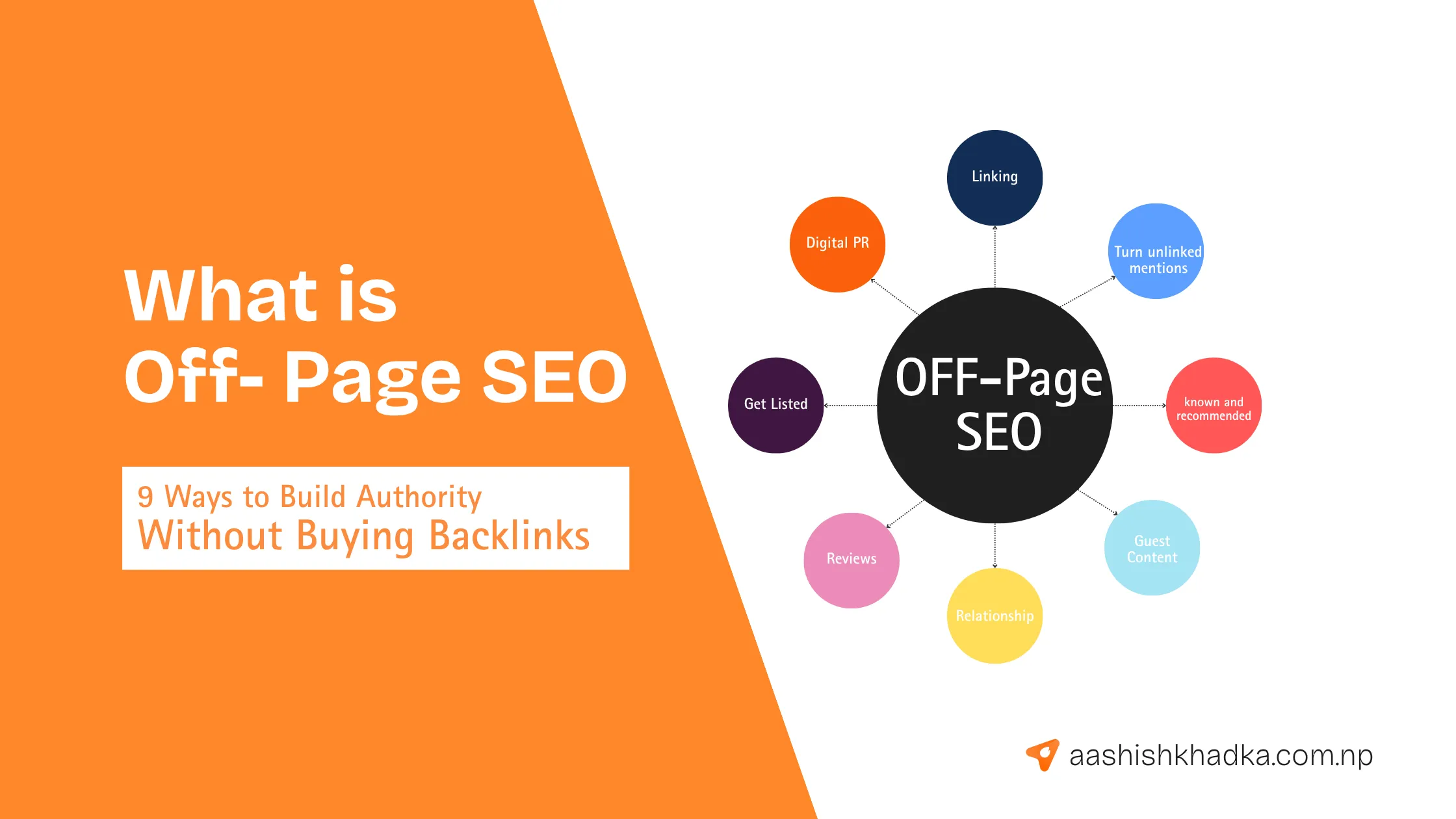
Off-page SEO is everything that happens outside your website that tells search engines your business is trustworthy and worth recommending. Your on-page SEO says "here's what I offer". Off-page SEO is other people saying "yes, they're good".
In this guide, you'll learn how Google looks at links and mentions, 9 safe ways to build real authority, and which popular tactics are a waste of money or actively risky.
What Counts as Off-Page SEO?
Signal | What it is | Why it matters |
|---|---|---|
Backlinks | Links from other websites to yours | Still one of the important ways Google discovers and evaluates pages |
Brand mentions | Your name mentioned elsewhere, even without a link | Helps search engines and AI tools connect your brand to your topic |
Reviews | Ratings on Google, Facebook, TripAdvisor and others | Big for local rankings and for trust |
Citations | Your business details listed on other sites | Confirms you're a real business |
Social and community signals | Discussions, shares and recommendations | Indirect: they spread your content and build awareness |
How Google Looks at Links
A backlink works a bit like a recommendation. But not all recommendations are equal:
Factor | Stronger link | Weaker link |
|---|---|---|
Relevance | A travel blog linking to your trekking guide | A random car blog linking to your trekking guide |
Trust | A respected news site or industry body | A site created only to sell links |
Placement | Inside the main content, in context | Hidden in a footer or a long list of links |
Editorial choice | Someone chose to link because your page is useful | You paid or swapped for it |
Link attributes: nofollow, sponsored, ugc
Websites can label links to tell Google what kind of link it is:
Attribute | Meaning | Example |
|---|---|---|
| Paid or advertising link | A paid placement on a blog |
| User-generated content | Links in comments or forum posts |
| "Don't treat this as an endorsement" | Links a site doesn't want to vouch for |
Google treats these as hints. The important rule: paid links must be labelled as sponsored or nofollow. Buying links that pass ranking credit breaks Google's spam policies.
How your own site links between its pages matters too, but that's on-page and structural SEO. [Internal Linking for SEO]
9 Ways to Build Authority (Without Buying Backlinks)
These all have one thing in common: someone, somewhere, chooses to mention, link to or review you because you deserve it.
1. Create something worth linking to
People link to things that are useful, original or hard to find elsewhere. These are called linkable assets:
Original data or research (e.g. a survey of local businesses)
Free tools or calculators (e.g. a trek cost calculator)
The most complete guide on a specific topic
Templates and checklists people can use
A normal service page rarely earns links on its own. A genuinely useful resource does.
2. Get quoted by journalists and publications (digital PR)
Journalists and bloggers constantly need expert comments. Platforms like Source of Sources, Qwoted and Featured.com send you their requests. Answer the ones where you're genuinely an expert, quickly, with something specific, and you can earn mentions and links from real publications.
Don't forget local media: editors of publications in your own city often welcome a useful expert source.
3. Get listed where your customers actually look
Some listings are genuinely valuable: your industry association, chamber of commerce, Google Business Profile, Bing Places, TripAdvisor for tourism, and well-known directories in your niche.
The test: would a real customer use this site to find a business like yours? If yes, list yourself. If it's a random "submit your link" site, skip it.
4. Collect genuine reviews
Reviews are off-page SEO you can start today. They influence local rankings, help people choose you, and help AI tools judge your reputation.
Ask every customer (not only the happy ones), at the right moment, with a direct link
Reply to every review, good and bad
Never buy reviews or offer rewards for positive ones
More on this in my local SEO guide. [Local SEO Guide]
5. Turn unlinked mentions into links
Sometimes people mention your business without linking. Set up free alerts (Google Alerts or Talkwalker Alerts) for your brand name, and when you find a mention, politely ask the author to add a link. They already like you enough to mention you, so many say yes.
6. Build real local and industry relationships
The best links often come from real-world relationships:
Suppliers or partners listing you as a partner
Sponsoring a local event, school or community project
Speaking at a workshop, college or meetup
Collaborating on content with a complementary business
These are hard for competitors to copy because they come from who you actually work with.
7. Write guest content for relevant sites
Writing a genuinely useful article for a respected site in your industry gets your name in front of a new audience and often earns a link. The key words are relevant and respected. One great guest post on a trusted site beats twenty on sites that publish anything for anyone.
8. Be helpful in communities
Answer real questions on Reddit, Quora, LinkedIn and Facebook groups where your customers hang out. Most of these links are nofollow, so the value isn't the link. It's being known and recommended, which also helps AI tools that learn from community discussions.
The rule: give first. Only mention your business when it genuinely answers the question.
9. Share your content where it can spread
Social media and video don't directly boost rankings, but they put your content in front of people who might write about it, link to it or search for your brand later. Short videos, LinkedIn posts and newsletters are all ways to get your best content seen.
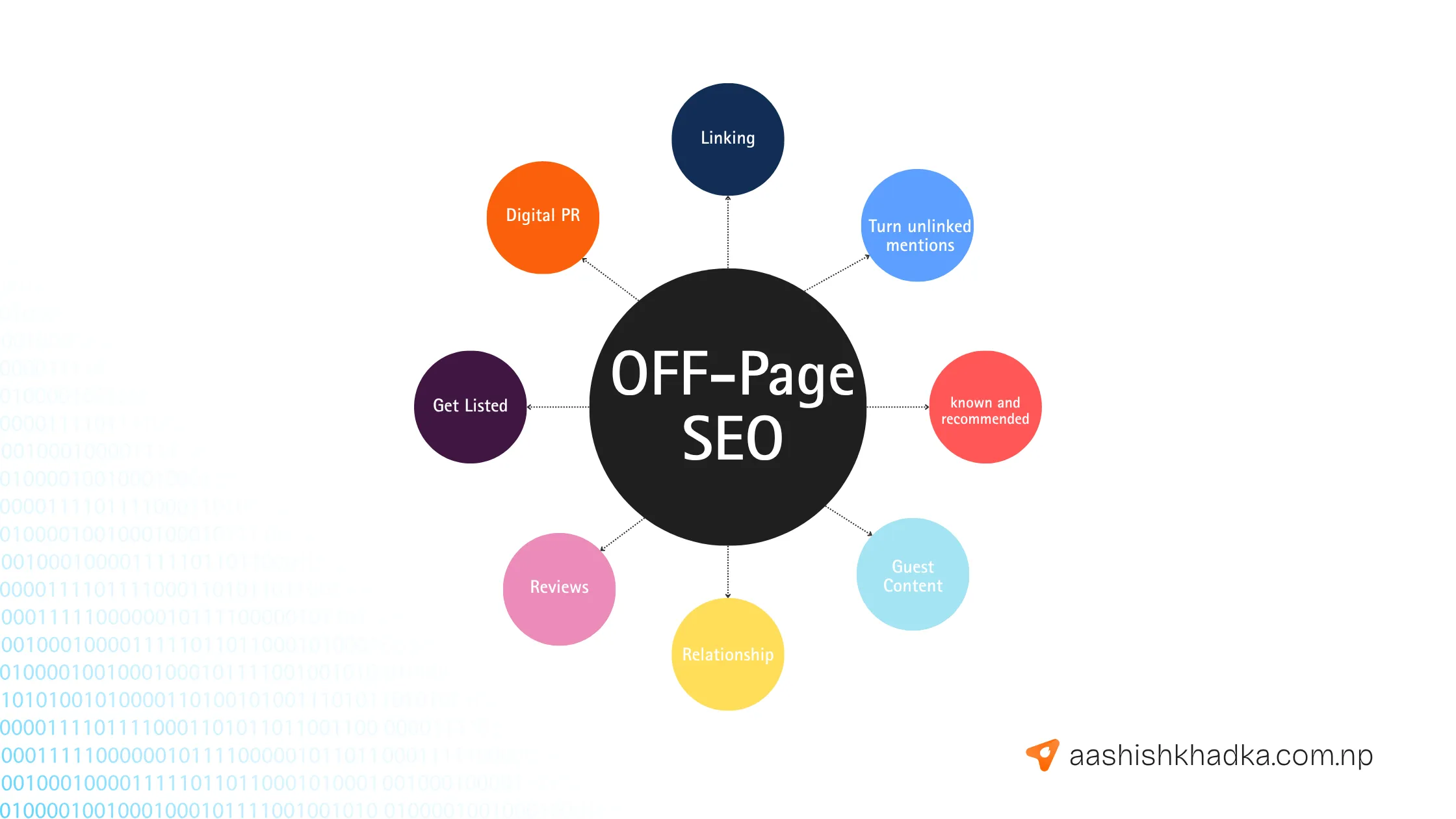
For a full list of tools to help with each of these, see my off-page SEO resources page. [Off-Page SEO Resources]
Safe vs Risky: What to Avoid
A lot of "off-page SEO" sold online is outdated or against Google's rules. Here's an honest breakdown:
Tactic | Verdict | Why |
|---|---|---|
Earning links with useful content | ✅ Safe | This is exactly what Google wants |
Digital PR and expert quotes | ✅ Safe | Real editorial links and mentions |
Genuine reviews from real customers | ✅ Safe | Builds trust and local visibility |
Relevant, quality directories | ✅ Safe | Real listings people use |
Guest posts on respected, relevant sites | ✅ Safe if genuine | Fine when the content is real and useful |
Mass directory and bookmarking submissions | ⚠️ Mostly useless | Google largely ignores low-quality links like these |
Blog comment and forum signature links | ⚠️ Mostly useless | Usually nofollow, often treated as spam |
Buying links that pass ranking credit | ❌ Risky | Breaks Google's spam policies |
Private blog networks (PBNs) | ❌ Risky | Designed to manipulate rankings |
"1,000 backlinks for $5" packages | ❌ Risky | Spam that can hurt your site |
Fake or paid reviews | ❌ Risky | Against platform rules and can get profiles removed |
A simple test: if anyone could get the same link in a few minutes without anyone approving it, it's probably worthless. Good links need someone to decide you deserve them.
How to Check Your Backlinks (for Free)
Tool | What you can see |
|---|---|
Google Search Console → Links | The sites linking to you that Google knows about, and your most-linked pages |
Bing Webmaster Tools | Your backlinks, plus a comparison with competitors |
Ahrefs Webmaster Tools (free for sites you own) | Detailed backlink data for your own site |
Check once a month: who's linking to you, which pages get links, and whether you've lost any links you can win back.
Off-Page SEO in the Age of AI Search
AI tools like ChatGPT and Perplexity don't only read your website. They form a picture of your business from what other sources say: reviews, news coverage, community discussions, directories and comparison articles.
That makes off-page work even more valuable now. Being mentioned in places people (and AI tools) trust helps you appear when someone asks an AI "who's the best [service] in [city]?" I explore this more in my post on SEO vs AEO vs GEO. [SEO vs AEO vs GEO]
FAQs About Off-Page SEO
What is off-page SEO in simple words?
Everything outside your website that builds trust in your business: backlinks, brand mentions, reviews and listings. It's other people vouching for you.
Are backlinks still important?
Yes. Links remain one of the ways Google discovers pages and judges their importance. But a few relevant, trusted links matter far more than many low-quality ones.
How many backlinks do I need to rank?
There's no fixed number. It depends on your competition. Look at the pages ranking for your keyword and the kinds of sites linking to them. That's your real benchmark.
Is it OK to buy backlinks?
No. Buying links that pass ranking credit breaks Google's spam policies and can lead to your site being demoted. If a link is paid, it should be marked as sponsored.
Do social media links help SEO?
Not directly, since most are nofollow. But social media spreads your content, which can lead to real links, mentions and brand searches.
How long does off-page SEO take?
It's slow and steady. Reviews and listings help within weeks; earning quality links and building reputation takes months of consistent effort.
Key SEO Terms in This Post
Term | Meaning |
|---|---|
Off-page SEO | Building trust and authority outside your own website |
Backlink | A link from another website to yours |
Brand mention | Your name appearing on another site, with or without a link |
Citation | A listing of your business name, address and phone |
Linkable asset | Content so useful that people link to it naturally |
Digital PR | Getting featured or quoted in publications |
Nofollow / sponsored / ugc | Link labels that tell Google how to treat a link |
PBN | Private blog network: sites built to fake links (avoid) |
Wrapping Up
Off-page SEO isn't about collecting as many links as possible. It's about earning a reputation: useful content people want to share, real reviews, genuine relationships and being part of your community, online and offline.
Pick two or three methods from this list that fit your business, and do them consistently for a few months. That beats any shortcut.
Next up: how to show up when people search near you. [Local SEO Guide: How to Rank in Google Maps]
Need a realistic off-page plan for your business? Get in touch.