On this page
Pick up your phone and search for something you need today. Maybe "best momo in Pokhara", "how to renew a passport", or "laptop repair near me".
In under a second, Google shows you a list of results. A few businesses are right at the top. Most are on page two, where almost nobody looks.
So here's the question I want to answer in this post: why do some websites show up first, and others never show up at all?
The answer is SEO. In this guide, I'll explain what SEO is, how search engines actually work behind the scenes, what decides who ranks, and how AI tools like ChatGPT and Google's AI Overviews are changing the game. At the end, you'll get a simple 30-day plan to start improving your own website.
No jargon walls. If you can use Google, you can understand this.
What is SEO? (The Simple Answer)
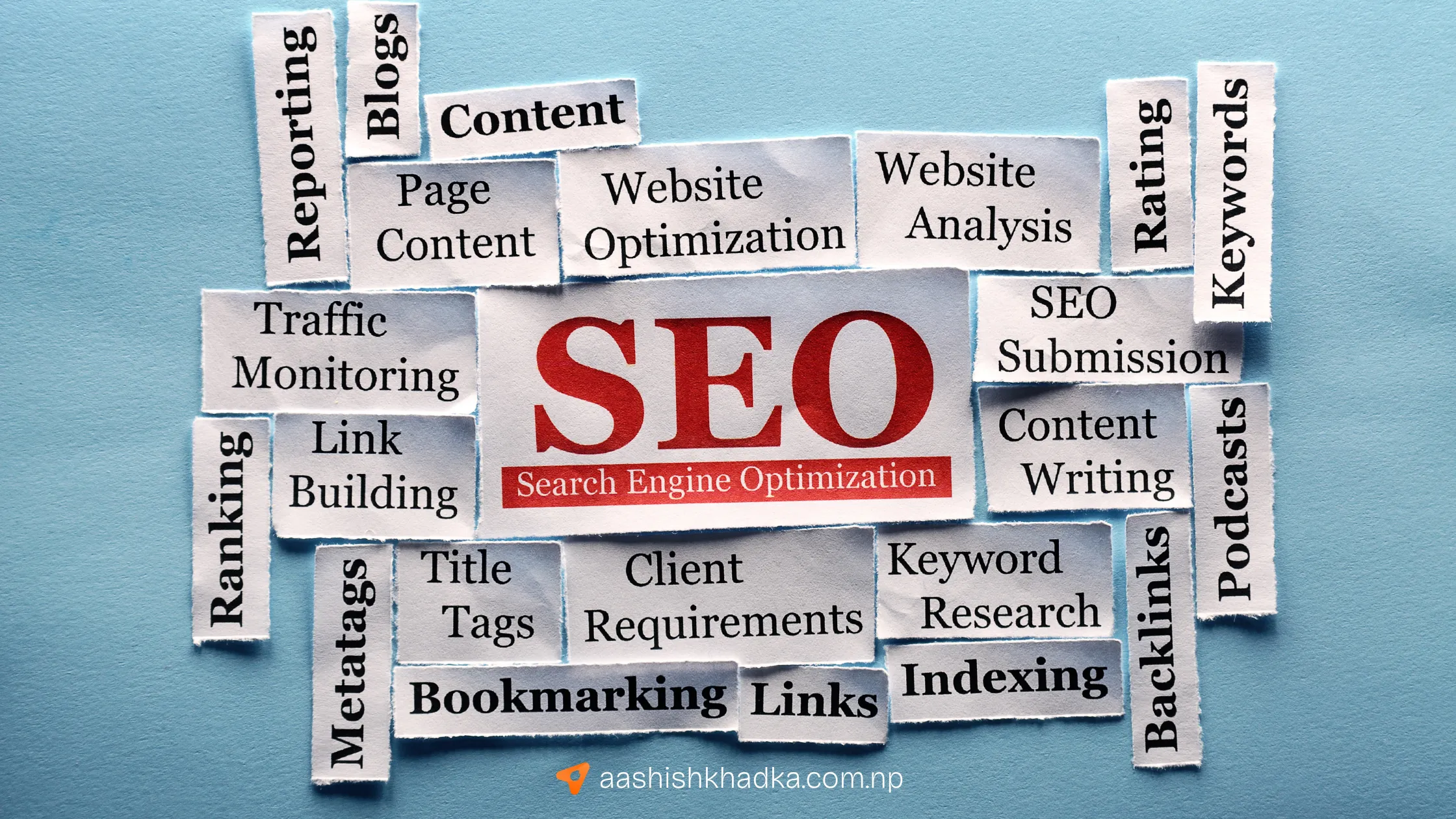
SEO stands for Search Engine Optimization. It means improving your website so search engines like Google can find it, understand it and show it to people searching for what you offer.
The traffic you get this way is called organic traffic: visitors who come from normal search results, not from ads. You don't pay Google for each click. You earn the spot.
Here's how organic results compare with paid ones:
Organic results (SEO) | Paid results (Google Ads) | |
|---|---|---|
Where they show | Main search results | Marked "Sponsored" at the top or bottom |
Cost per click | Free | You pay for every click |
Speed | Slow to build (months) | Instant once the ad runs |
When you stop paying | Results keep coming | Traffic stops immediately |
Trust | Many people trust organic results more | Some people skip ads on purpose |
One important thing to know from the start: Google doesn't accept payment for organic rankings. No one can buy their way to the top of organic results, and no honest SEO person can guarantee you the #1 spot if the competition is very high.
How Search Engines Work: 3 Steps Behind Every Result
Google describes its process in three stages. Understanding them makes everything else in SEO click.
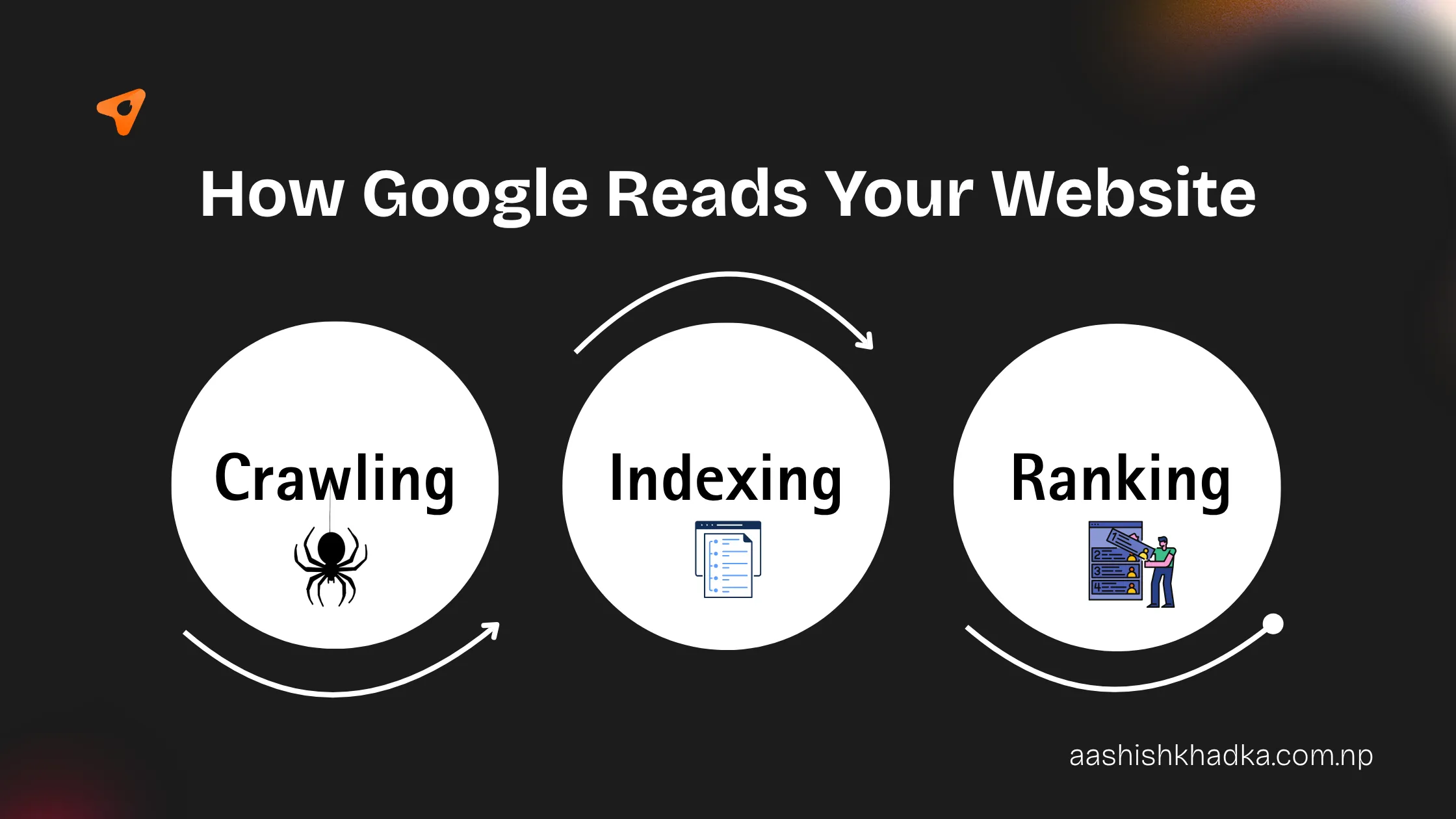
Step 1: Crawling (finding your pages)
Google uses automated programs called crawlers (Google's is called Googlebot) that move around the web by following links. When Googlebot finds your page, it downloads the text, images and code.
If Googlebot can't reach a page, maybe because of a blocking rule, a broken link or a server error, the process stops right there.
Step 2: Indexing (understanding and storing them)
Next, Google reads the page to figure out what it's about: the text, the headings, the images, the topic. It then stores that information in the Google index, a gigantic library of web pages.
Not every crawled page gets indexed. Thin pages, duplicates or pages marked "noindex" can be left out.
Step 3: Serving (showing the best results)
When someone searches, Google looks through its index and picks the pages it thinks are the most helpful for that exact search, then puts them in order. This is what most people call ranking.
The key takeaway: SEO is about making sure your pages pass all three steps, and then making them the best answer in step 3.
If you want to go deeper into the crawling and indexing side, read my guide on technical SEO. Click here
How Google Decides Who Ranks First
Google uses many signals and doesn't publish a full list. But it has explained the main things its systems look at, and they're easy to understand:
What Google looks at | In plain words | Example |
|---|---|---|
Meaning of the search | What is the person actually looking for? | "Apple" could mean the fruit or the company |
Relevance | Does the page match what they want? | A menu page for "momo near me", not a blog about momo history |
Quality | Is the content helpful, accurate and trustworthy? | Written by someone who knows the topic, with real details |
Usability | Is the page easy to use? | Loads fast, works well on a phone |
Context | Where is the person, what language, what time? | "Restaurant" shows nearby places, not ones 300 km away |
Notice what's not on the list: how many times you repeat a keyword, or how long your page is. Modern SEO is about being the most useful answer, not about tricks.
The 4 Main Types of SEO
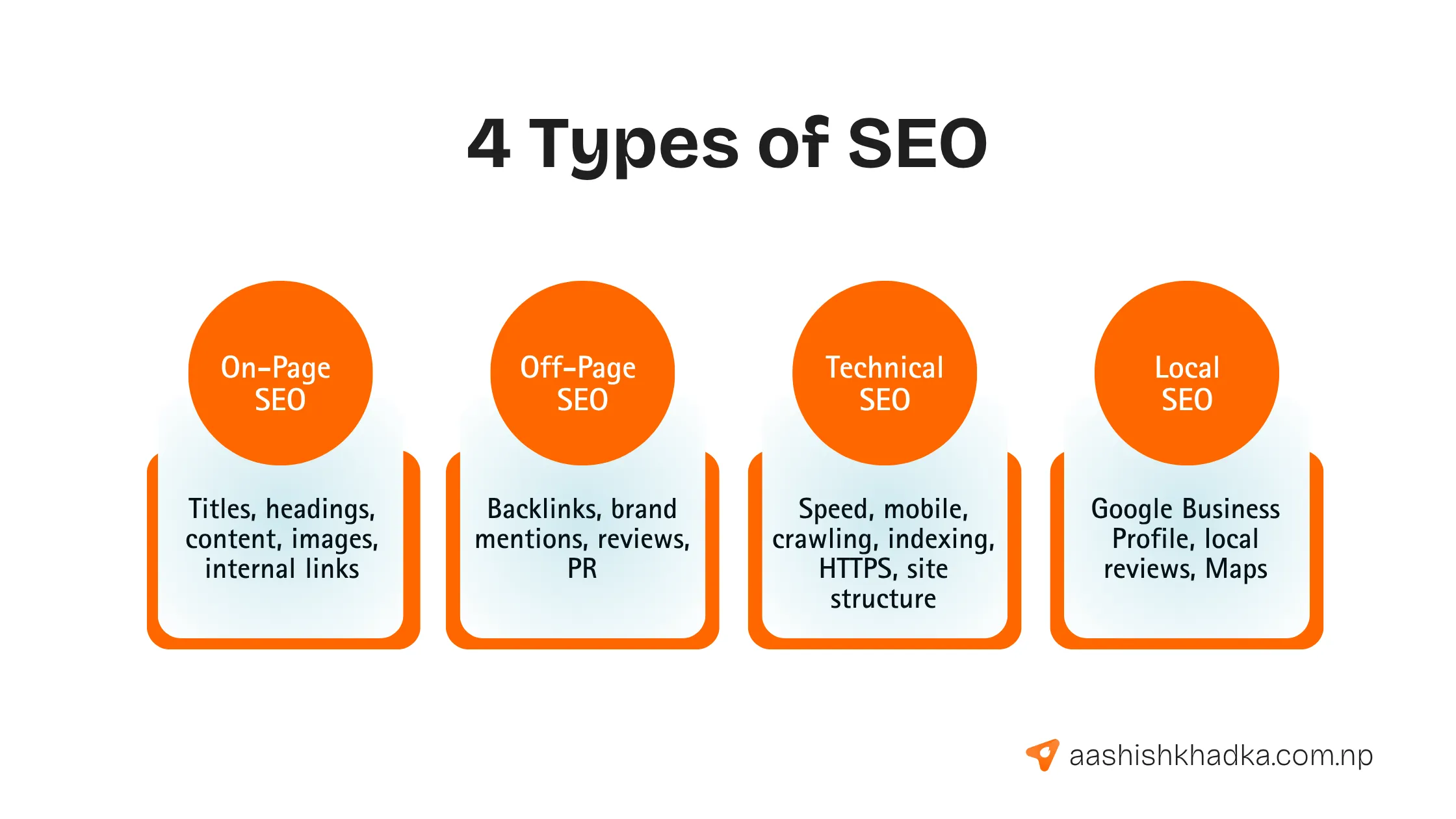
SEO isn't one task. It's four areas that work together. Think of your website as a shop:
Type | Shop comparison | What it covers | Read more |
|---|---|---|---|
Technical SEO | The building: doors, wiring, signboard | Speed, mobile, crawling, indexing, HTTPS, site structure | |
On-page SEO | What's inside: products, labels, layout | Titles, headings, content, images, internal links | |
Off-page SEO | Your reputation in town | Backlinks, brand mentions, reviews, PR | |
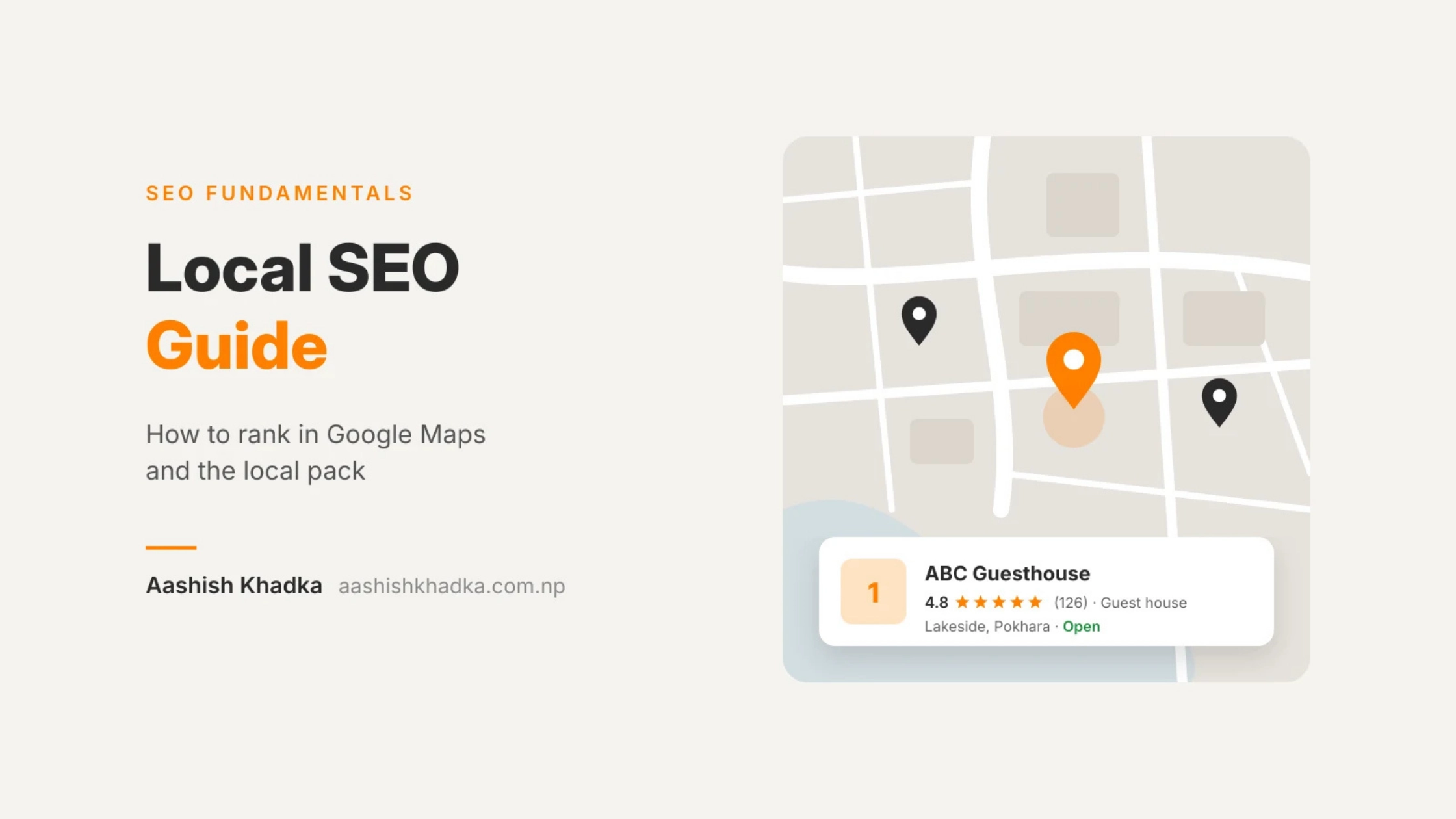
Local SEO | Being on the map so nearby people find you | Google Business Profile, local reviews, Maps |
You need all four. A beautiful shop (on-page) with a locked door (technical) and no reputation (off-page) won't get customers.
Where AI Search Fits In
Search is changing. More and more, people get answers from AI instead of clicking ten blue links:
Google AI Overviews and AI Mode show an AI-written summary at the top of some searches.
ChatGPT, Perplexity, Claude and Gemini answer questions directly and often cite websites as sources.
Does this mean SEO is dead? No. Here's what changes and what doesn't:
What stays the same | What's new |
|---|---|
Your pages still need to be crawlable and indexed | AI tools pull short, clear answers from your pages, so structure matters even more |
Helpful, trustworthy content still wins | Being mentioned by other trusted sites helps AI tools recommend you |
Google's AI features are built on its normal search index | Some AI tools use their own crawlers, which you shouldn't accidentally block |
Good technical SEO is still the foundation | You're optimising to be cited, not only to be clicked |
In short: good SEO is the entry ticket for AI search too. I explain the difference between SEO, AEO and GEO in a separate post. [SEO vs AEO vs GEO]
How Long Does SEO Take?
This is the question everyone asks, so here's the honest answer: SEO usually takes months, not days. How fast depends on a few things:
Factor | Faster results | Slower results |
|---|---|---|
Competition | A specific, local or niche search | A broad, popular search |
Website age and authority | An established site with some backlinks | A brand-new domain |
Starting point | Small fixes on a decent site | A site with major technical problems |
Content quality | Clearly better than what ranks now | Similar to everything else |
As a rough guide, quick technical fixes and Google Business Profile improvements can show results within weeks. New content usually takes a few months to settle in. Competitive keywords can take a year or more. Anyone promising "page one in 7 days" is either selling ads or selling something risky, haha you know what I mean..
Common SEO Myths (and the Truth)
Myth | Truth |
|---|---|
"You can pay Google to rank higher" | Google doesn't sell organic rankings. Ads are separate and labelled |
"More keywords = better rankings" | Stuffing keywords makes content worse and can hurt you |
"SEO is a one-time job" | Search, competitors and Google's systems keep changing |
"Only big companies can do SEO" | Small, specific and local businesses often win easier searches |
"AI killed SEO" | AI search still depends on crawlable, trustworthy, well-structured content |
"Longer content always ranks better" | The best answer wins, whatever its length |
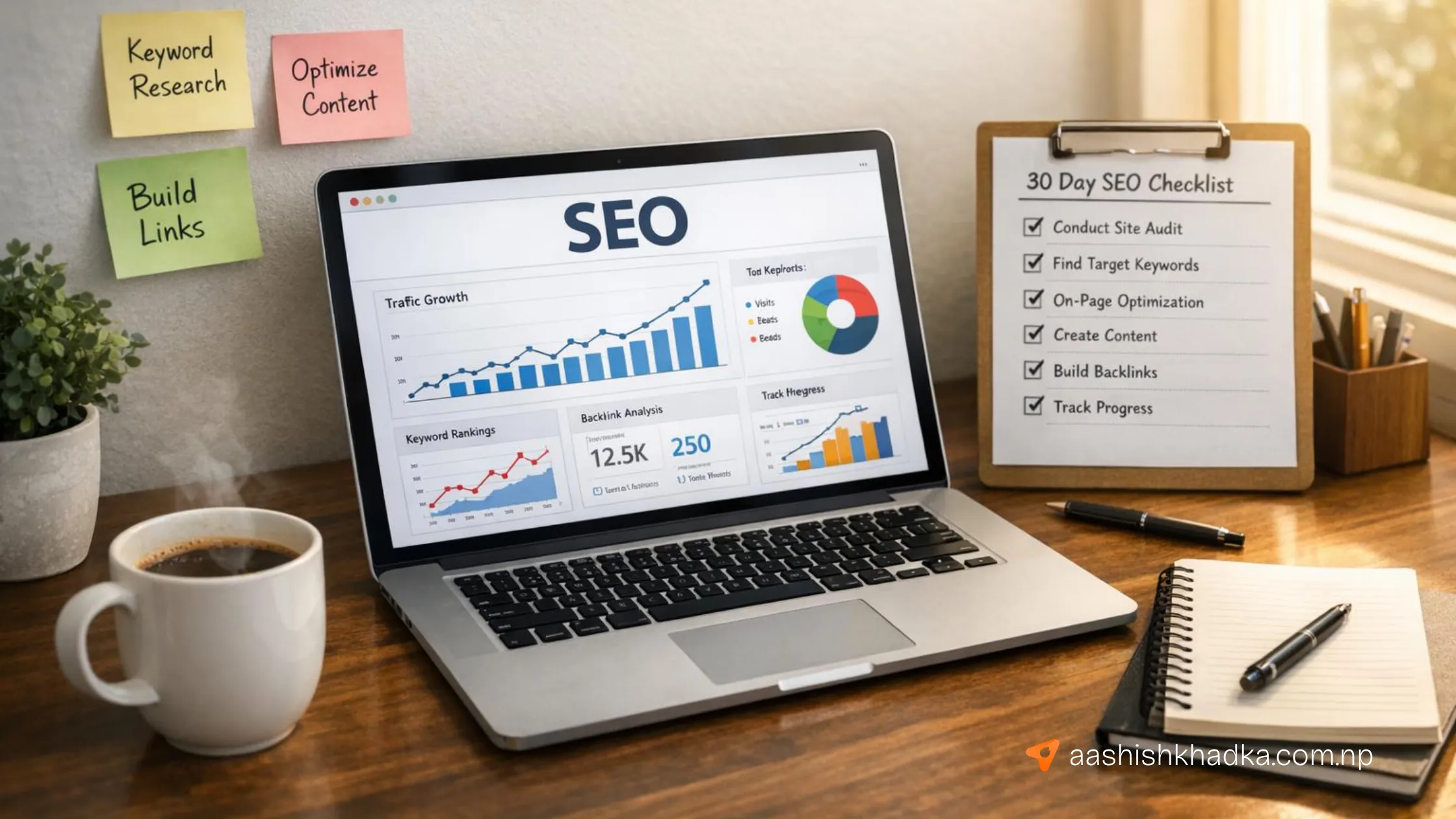
Your 30-Day SEO Starter Plan
Reading about SEO is good. Doing it is better. Here's a simple plan for your first month, using only free tools.
Week | Focus | Tasks |
|---|---|---|
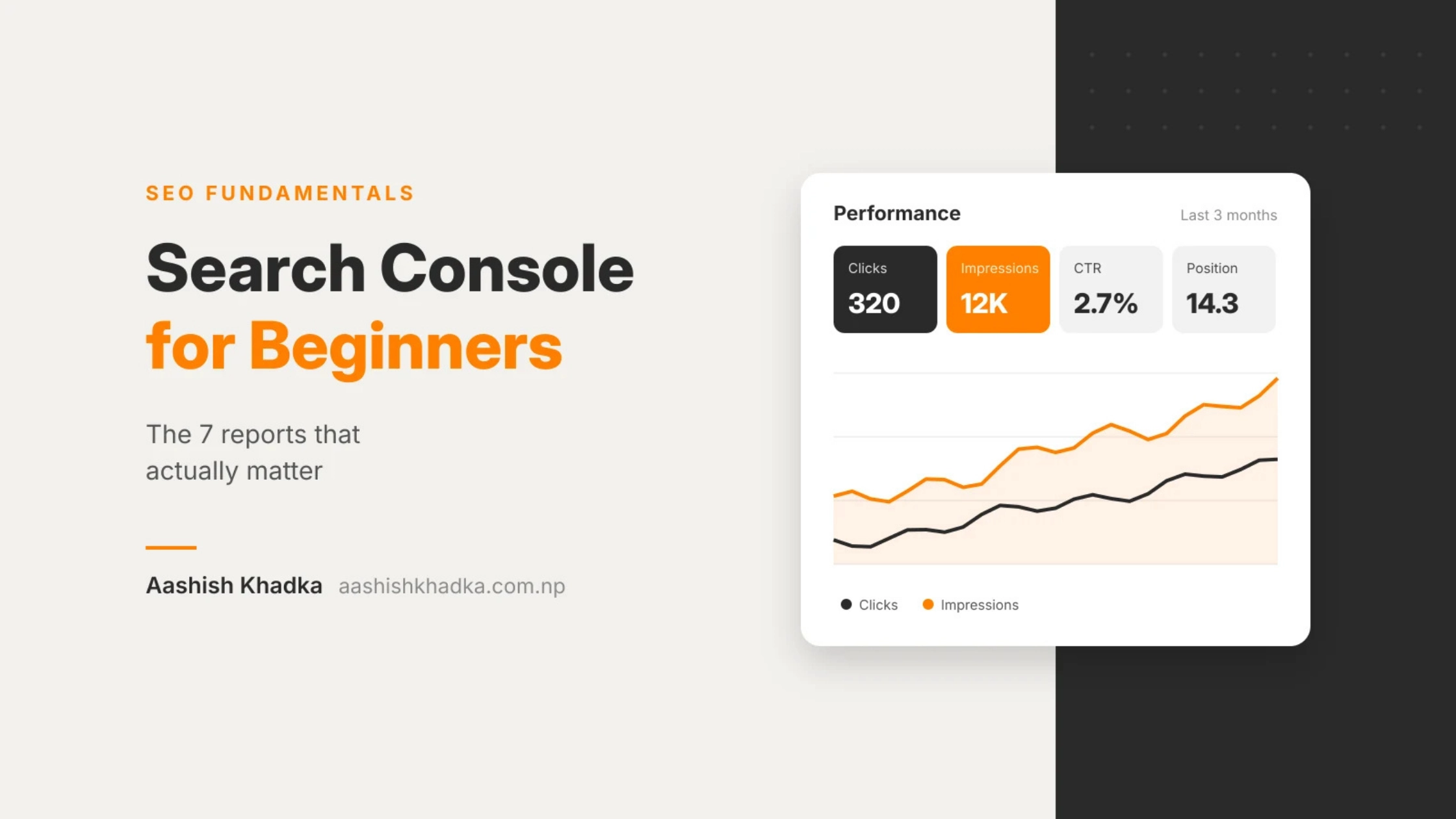
Week 1 | Get visibility into your site | Set up Google Search Console and verify your site · Submit your sitemap · Check the Pages report for anything not indexed |
Week 2 | Fix the foundation | Test your main pages on PageSpeed Insights · Open your site on a real phone · Make sure it loads on HTTPS · Fix any broken links you find |
Week 3 | Improve your key pages | Pick your 3–5 most important pages · Give each a clear title and meta description · Check each has one H1 and a logical structure · Link them to each other |
Week 4 | Get found locally and plan content | Set up or complete your Google Business Profile · Ask 3–5 happy customers for reviews · Do basic keyword research and list 5 questions your customers ask |
After 30 days, you won't be "done", but you'll have the foundation that every other SEO effort builds on.
FAQs About SEO
What does SEO stand for?
SEO stands for Search Engine Optimization: improving your website so it appears in search results when people look for what you offer.
Is SEO free?
The traffic is free. You don't pay per click like with ads. But SEO takes time and effort, whether that's your own time or paying someone to help.
Can I do SEO myself?
Yes, the basics are very doable. Setting up Search Console, writing clear page titles, creating a Google Business Profile and publishing helpful content don't need a developer. Bigger technical problems may need expert help.
How is SEO different from Google Ads?
Google Ads puts you at the top immediately, but you pay for every click and traffic stops when you stop paying. SEO takes longer to build but keeps bringing visitors without paying per click.
Is SEO still worth it with AI search?
Yes. AI tools still need to find and trust websites to answer questions, and Google's AI features use its normal search index. Good SEO makes you more likely to appear in both.
Key SEO Terms in This Post
Term | Meaning |
|---|---|
SEO | Search Engine Optimization: improving your site to appear in search results |
Organic traffic | Visitors from normal (unpaid) search results |
Crawling | Google discovering and downloading your pages |
Googlebot | Google's crawler program |
Indexing | Google understanding and storing your pages in its database |
Index | Google's giant library of web pages |
Ranking | The order Google puts results in |
SERP | Search Engine Results Page: the page you see after searching |
AI Overviews | Google's AI-written summaries at the top of some searches |
Wrapping Up
SEO sounds technical, but the idea is simple: help search engines find your pages, understand them, and see them as the best answer. Everything else in SEO is a way of doing one of those three things better.
This post is the starting point of my SEO series. Next, I'll show you how to find what people actually search for, step by step. [How to Do Keyword Research for Free]
If you'd like a second pair of eyes on your website, get in touch.